Supervisors
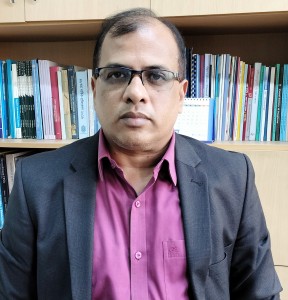
Mohammad Riazul Islam, PhD
Professor & Principal Investigator
Dept. of Biochemistry and Molecular Biology, University of Dhaka
Prof. Dr. Mohammad Riazul Islam, the Principal Investigator (PI) of Molecular Biology Laboratory, specializing in microbial genomics and proteomics, bioinformatics, microbial biotechnology, antimicrobial peptides, and peptide engineering. He completed his B.Sc. (1998) and M.Sc. (1999) in Biochemistry and Molecular Biology at the University of Dhaka, followed by a Diploma in Biotechnology at Osaka University, Japan (2005), and a Ph.D. in Microbial Biotechnology at Kyushu University, Japan (2009) under a MONBUKAGAKUSHO (MEXT) scholarship. He began his career as a Research Officer at the Tuberculosis Laboratory of ICDDR,B (2002–2004) before joining Dhaka University as a Lecturer in 2004, rising through Assistant Professor and Associate Professor to become full Professor in March 2018. Along the way, he held two internationally competitive postdoctoral positions: a JSPS Postdoctoral Research Fellowship at Kyushu University's Laboratory of Microbial Technology (2010–2012), and the Georg Forster Fellowship for Experienced Researchers from the Alexander von Humboldt Foundation, held across two terms (2014–2015 and 2016) at the Institute for Medical Microbiology, Immunology and Parasitology, University Hospital Bonn, Germany.
His research has evolved from foundational work on lantibiotics and antimicrobial peptide structure-function (notably nukacin ISK-1, homicorcin, and related lipid-II binding mechanisms) into a broader program spanning jute endophyte biology, plant growth-promoting bacteria, industrial enzymes, jute fiber retting and processing, Hilsa fish genomics/transcriptomics, and drug-resistant pathogen biology. He has served as Principal Investigator on more than a dozen funded projects from bodies such as the Ministry of Science and Technology (Bangladesh), UGC, BAS-USDA, ICGEB, the Ministry of ICT, and industry partners like Akij-Bashir Group and NCC Bank PLC, and as Co-PI on several others, including a taxol-biosynthesis project with ICGEB. His publication record includes over 45 peer-reviewed papers in journals such as Scientific Reports, PLoS ONE, Journal of the American Chemical Society, Communications Biology, Industrial Crops and Products, and Scientific Data, along with three book chapters published by Springer.
He has supervised 3 PhD, 2 MPhil, and 24 MS thesis students at Dhaka University. His professional service includes roles as an Executive Board Member of the Asian Federation of Biotechnology (AFOB), General Secretary of the Association of Humboldt Fellows, Bangladesh, an Executive Member of the Center for Advanced Research, Extension and Service (CARES), and a National Technical Committee Member for Bangladesh's National DNA Forensic Laboratory under the Ministry of Women and Children Affairs. He holds memberships in the Humboldt Foundation (Germany), the Japan Society for Bioscience, Biotechnology, and Agrochemistry (JSBBA), the American Chemical Society (ACS), the Bangladesh Society for Biochemistry and Molecular Biology (BSBMB), and the Graduate Biochemist Association (GBA). Notable honors include the Young Scientist Fellowship for the FAOBMB Congress 2012 in Bangkok, Thailand, and a Distinction of Young Scientist award at the Second International Symposium on Antimicrobial Peptides in Saint-Malo, France (2009), in addition to his Humboldt, JSPS, MEXT, and UNESCO fellowships.

Farhana Tasnim Chowdhury
Assistant Professor
Dept. of Biochemistry and Molecular Biology, University of Dhaka
She had been the co-principal investigator of four research projects funded by different organizations like the University Grants Commission of Bangladesh, the Ministry of Science and Technology, and the University of Dhaka. She also won the Islamic Development Bank Roadshow Research Grant Competition. She is an active member of ASM, BSBMB, and GBA.
She is also working as a house tutor in Ruqayyah Hall, University of Dhaka, Bangladesh, where she acts as part of the administrative team and performs community involvement work. She is also the founding and organizing member of the Environment Club at Ruqayyah Hall, where she engages students actively in the environment awareness activity and provides them with opportunities to acquire the mindsets, principles, and abilities required to safeguard and enhance the environment.